

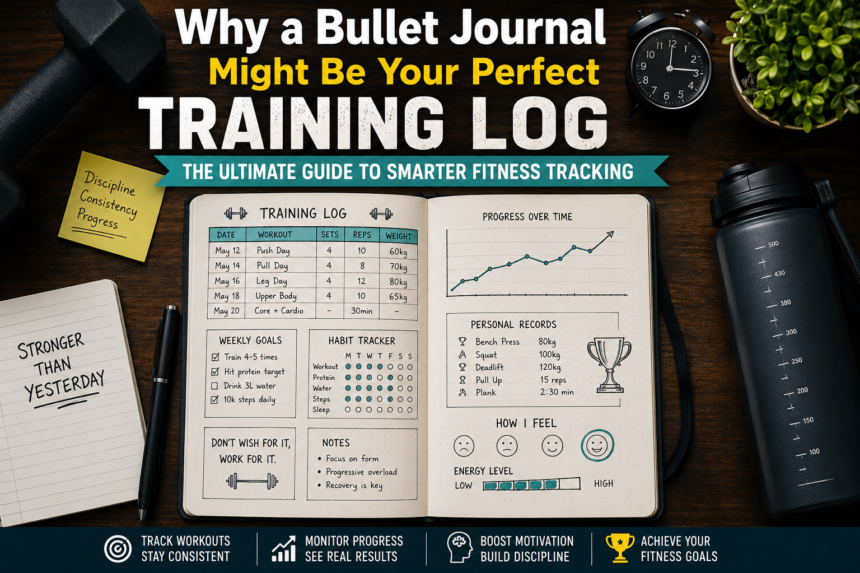
Why a Bullet Journal Might Be Your Perfect Training Log
If you’ve ever started a workout routine only to lose motivation a few weeks later, you’re not alone. Many people focus entirely on the workouts while overlooking one of the biggest factors behind long-term success—tracking progress consistently. That’s exactly why a bullet journal might be your perfect training log.
Unlike digital fitness apps that often overwhelm users with notifications, subscriptions, and endless features, a bullet journal provides a distraction-free system that keeps your attention on what truly matters: your progress. Whether you’re lifting weights, training for a marathon, improving flexibility, or simply trying to build healthier habits, a thoughtfully designed journal can become your personal coach on paper.
This comprehensive guide explains why a bullet journal might be your perfect training log, how to build one, the benefits it offers, and the practical methods experienced athletes and fitness enthusiasts use to stay accountable.
What Is a Bullet Journal?
A bullet journal is a customizable notebook system that combines planning, habit tracking, note-taking, and goal management into one organized space.
Unlike traditional fitness planners with fixed layouts, a bullet journal allows you to create pages specifically for your own training style.
You decide what matters.
That could include:
- Workout routines
- Strength progression
- Cardio sessions
- Nutrition notes
- Recovery tracking
- Sleep quality
- Injury management
- Weekly goals
- Personal records
- Motivation pages
Its flexibility is one of the biggest reasons many athletes continue using it for years.
Why a Bullet Journal Might Be Your Perfect Training Log for Long-Term Success
Most training programs fail because people stop measuring progress—not because the workouts are ineffective.
A bullet journal changes that.
Every workout becomes part of a larger story. Instead of wondering whether you’re improving, you have written evidence showing exactly how far you’ve come.
This creates powerful psychological benefits:
- Increased accountability
- Better motivation
- Improved consistency
- More confidence
- Stronger discipline
Progress becomes visible.
And visible progress creates momentum.
Why Writing by Hand Improves Training Awareness
Research in learning and cognitive psychology consistently shows that handwriting encourages deeper information processing than passive digital entry.
When recording workouts manually, you’re naturally forced to reflect on questions like:
- Was today’s workout challenging?
- Did I lift more weight?
- How was my recovery?
- Was my nutrition good enough?
- What should I improve next session?
That small moment of reflection often becomes more valuable than the workout itself.
Why a Bullet Journal Might Be Your Perfect Training Log Instead of a Fitness App
Fitness apps certainly have advantages.
But many users eventually stop opening them.
A bullet journal offers something technology cannot easily replicate: complete ownership.
Here’s a comparison.
| Bullet Journal | Fitness App |
|---|---|
| Fully customizable | Limited templates |
| No subscriptions | Often requires premium plans |
| No distractions | Notifications everywhere |
| Creative freedom | Fixed layouts |
| Works forever | Apps disappear or update |
| Personal reflection | Mostly automated |
The journal becomes uniquely yours.
No two training logs ever look alike.
Track More Than Just Workouts
One overlooked advantage is that your journal captures your entire fitness lifestyle.
Instead of recording only exercises, you can also monitor:
Physical Metrics
- Weight
- Body fat percentage
- Measurements
- Resting heart rate
- Mobility improvements
Performance Metrics
- Personal records
- Running pace
- Weekly volume
- Training intensity
- Recovery time
Lifestyle Factors
- Sleep
- Water intake
- Daily steps
- Stress levels
- Mood
- Energy
Looking at these patterns often reveals why certain workouts felt amazing while others didn’t.
Why a Bullet Journal Might Be Your Perfect Training Log for Strength Training
Strength athletes especially benefit from detailed records.
Instead of guessing your previous numbers, every lift is documented.
Example tracking page:
| Exercise | Week 1 | Week 2 | Week 3 |
|---|---|---|---|
| Bench Press | 70kg × 8 | 72.5kg × 8 | 75kg × 7 |
| Squat | 100kg × 5 | 102.5kg × 5 | 105kg × 5 |
| Deadlift | 120kg × 5 | 125kg × 5 | 130kg × 5 |
This makes progressive overload much easier.
Small improvements become obvious.
Better Goal Setting Through Visual Planning
Goals become more realistic when broken into smaller milestones.
Instead of writing:
“Get stronger.”
You can create measurable targets.
Example:
- Increase squat by 20 kg
- Run 10 km
- Complete 50 push-ups
- Train four times weekly
- Sleep eight hours nightly
Checking off milestones provides regular motivation.
Habit Tracking Builds Consistency
Many people overestimate how consistent they actually are.
Habit trackers eliminate guesswork.
Track habits like:
- Gym attendance
- Protein intake
- Stretching
- Meditation
- Morning walks
- Hydration
- Recovery sessions
At the end of each month, you’ll clearly see which habits support your goals—and which ones need attention.
Why a Bullet Journal Might Be Your Perfect Training Log for Weight Loss
Weight loss is rarely linear.
Seeing temporary plateaus often discourages people.
A bullet journal provides context.
You can compare:
- Calories
- Exercise
- Sleep
- Water intake
- Mood
- Stress
- Weekly measurements
Instead of focusing only on the scale, you’ll recognize improvements across multiple health indicators.
That’s a much healthier mindset.
Monitor Recovery Like an Experienced Athlete
Training is only half of improvement.
Recovery determines adaptation.
Your journal can include daily recovery ratings.
Example:
| Recovery Factor | Rating |
|---|---|
| Sleep | 8/10 |
| Energy | 7/10 |
| Muscle soreness | 5/10 |
| Stress | 3/10 |
| Motivation | 9/10 |
Patterns become surprisingly clear after several weeks.
Creativity Makes Training More Enjoyable
A bullet journal isn’t just practical.
It’s enjoyable.
Many users decorate pages using:
- Colored pens
- Washi tape
- Stickers
- Monthly themes
- Inspirational quotes
- Progress charts
The creative process itself encourages consistency because people actually enjoy updating the journal.
Why a Bullet Journal Might Be Your Perfect Training Log for Mental Motivation
Fitness isn’t purely physical.
Mental resilience matters just as much.
Your journal becomes a place to record:
- Victories
- Lessons
- Challenges
- Breakthrough moments
- Gratitude
- Confidence milestones
Reading entries from six months earlier often reminds you how much stronger you’ve become.
That perspective is incredibly motivating.
Build Your Own Personalized Training Dashboard
Your bullet journal can contain multiple sections.
Popular pages include:
Monthly Calendar
Plan workouts ahead.
Weekly Training Schedule
Organize each session.
Exercise Library
Record favorite exercises.
Progress Photos
Add printed pictures monthly.
Personal Records
Celebrate achievements.
Injury Notes
Track recovery safely.
Nutrition Log
Monitor eating habits.
Reflection Pages
Review each month’s successes.
Common Mistakes to Avoid
Many beginners make their journals too complicated.
Keep it simple.
Avoid:
- Decorating every page before using it
- Tracking dozens of metrics
- Creating unrealistic goals
- Comparing yourself to others
- Skipping entries after one missed workout
Remember:
Consistency beats perfection.
Why a Bullet Journal Might Be Your Perfect Training Log for Every Fitness Level
You don’t need to be an elite athlete.
Beginners often benefit even more.
Whether you’re focused on:
- Walking
- Yoga
- CrossFit
- Bodybuilding
- Cycling
- Swimming
- Martial arts
- Running
- Functional fitness
A bullet journal adapts naturally to your routine.
That’s one reason it has become so popular across different fitness communities.
How to Start Today
Getting started is refreshingly simple.
You’ll need:
- A notebook.
- A pen.
- Five minutes.
Create these first pages:
- Fitness goals
- Workout log
- Monthly calendar
- Habit tracker
- Personal records
- Recovery tracker
That’s enough.
You can always expand later.
Long-Term Benefits You’ll Notice
People who maintain a bullet journal for several months often experience:
- Better workout consistency
- Improved self-awareness
- Higher motivation
- Reduced skipped sessions
- Smarter recovery
- More structured planning
- Faster goal achievement
- Greater confidence
The journal becomes more than a notebook.
It becomes a roadmap of your transformation.
Is a Bullet Journal Better Than Digital Tracking?
Neither method is universally better.
Digital apps excel at automation.
Bullet journals excel at intentionality.
If you enjoy creativity, reflection, flexibility, and mindful planning, a handwritten journal often delivers a more meaningful experience.
Many experienced athletes actually combine both:
- Smartwatch for automatic data
- Bullet journal for analysis and planning
This hybrid approach offers the best of both worlds.
Conclusion
Understanding why a bullet journal might be your perfect training log goes far beyond replacing a fitness app with a notebook. It’s about creating a personal system that keeps you engaged, accountable, and connected to your goals every step of the way.
A bullet journal transforms scattered workouts into a structured journey. It allows you to monitor progress, recognize patterns, celebrate achievements, and learn from setbacks—all while adapting to your unique training style. Whether you’re chasing strength, endurance, weight loss, or better overall health, consistent tracking can become the difference between short-lived motivation and lasting success.
If you’ve struggled to stick with fitness plans in the past, consider starting with something simple: one notebook, one pen, and one commitment to record every workout. Over time, those small entries become proof of your dedication—and a powerful reminder of just how far you’ve come.
Frequently Asked Questions
1. Why is a bullet journal better than a regular workout notebook?
A bullet journal is fully customizable. Unlike standard workout notebooks with fixed pages, you can design layouts that match your goals, whether you’re tracking strength, cardio, nutrition, recovery, or habits.
2. Can beginners use a bullet journal for fitness?
Absolutely. Beginners often benefit the most because the journal helps establish routines, build consistency, and monitor improvements without needing complicated tools or expensive apps.
3. How often should I update my training journal?
Ideally, update it immediately after every workout. This ensures accurate records and gives you a chance to reflect on your performance, recovery, and next steps while everything is still fresh.
4. What should I include in my bullet journal training log?
Start with workout details, personal records, weekly goals, habit tracking, sleep, hydration, nutrition notes, recovery ratings, and monthly progress reviews. Add more sections as your needs evolve.
5. Can I combine a fitness app with a bullet journal?
Yes. Many people use fitness apps or wearable devices to collect workout data automatically while using a bullet journal to analyze progress, plan future sessions, reflect on performance, and stay motivated. This combination provides both convenience and deeper personal insight.
Also Read…Theblogjournal.co.uk